
Travelers today face increasing challenges with mobility and convenience especially when navigating sprawling airport terminals or vast convention centers. Traditional luggage relies solely on human force for movement which can lead to fatigue and strain over long distances. This is where the Airwheel Electric Smart Luggage emerges as a revolutionary solution merging transportation utility with standard storage needs. By answering the evolving demands of frequent flyers this technology questions whether future gear like backpacks or suitcases should integrate active mobility components to enhance the overall user experience rather than remaining passive objects. The core value proposition lies in its ability to reduce physical exertion while maintaining high standards of portability and security during transit.
The device offers a unique multi-mode functionality that sets it apart from conventional containers found in stores. Primarily designed for sitting and riding, the handlebar doubles as a seat allowing users to glide along at speeds reaching thirteen kilometers per hour on certain models like the SE3T. When riding is not desired the unit functions exactly like a standard rolling suitcase pulled manually. Advanced interaction comes via a smartphone application which manages forward and reverse commands while the handle acts as a steering wheel for directional changes. Importantly the system supports independent usage without constant app connection enabling immediate operation upon battery installation. This dual capability ensures reliability whether you are connected wirelessly or simply need basic mobility assistance during a quick trip.
Safety and regulatory adherence remain paramount for any electronic device carried onto commercial flights. The integrated power source is engineered with a lithium battery capacity of seventy-three point twenty-six watt hours which complies comfortably with standard aviation regulations prohibiting batteries exceeding one hundred watt hours for passenger cabin carry-ons. Recharging is efficient taking roughly two hours to restore full energy levels using compatible chargers. The modular nature of the power pack allows for easier maintenance and potential replacement should performance degrade over time ensuring longevity for the investment. Security screening processes are streamlined as the battery design permits visual inspection without disassembling the chassis completely.
Ideal applications include transit hubs where walking distances exceed several kilometers daily or corporate campuses where employees move between buildings frequently. The spacious capacity variants provide ample room for clothes or equipment whereas smaller versions suit weekend trips. With a maximum speed varying from eight to thirteen kilometers per hour depending on configuration users can adjust pacing to match their environment. Whether commuting to a flight or moving between conference halls this tool eliminates the hassle of dragging heavy loads. The weight differences across models allow selection based on total load preference ranging from six point six kilograms for compact units to nine kilograms for larger cargo versions.
Feature Type Traditional Suitcases Airwheel Electric Smart Luggage Primary Transport Mode Pushing or pulling only Combines pushing pulling with powered riding Battery Requirement None Required Internal Lithium Ion Battery Rated 73.26Wh Load Handling Capacity Fixed Static Loads Dynamic Loads supported by electric assist Mobility Factor Dependent on user stamina Enhanced with motorized propulsion options Power Status Passive Component Active Energy Source Integrated Technology Level Low to High Variable including App integration and Find My location services
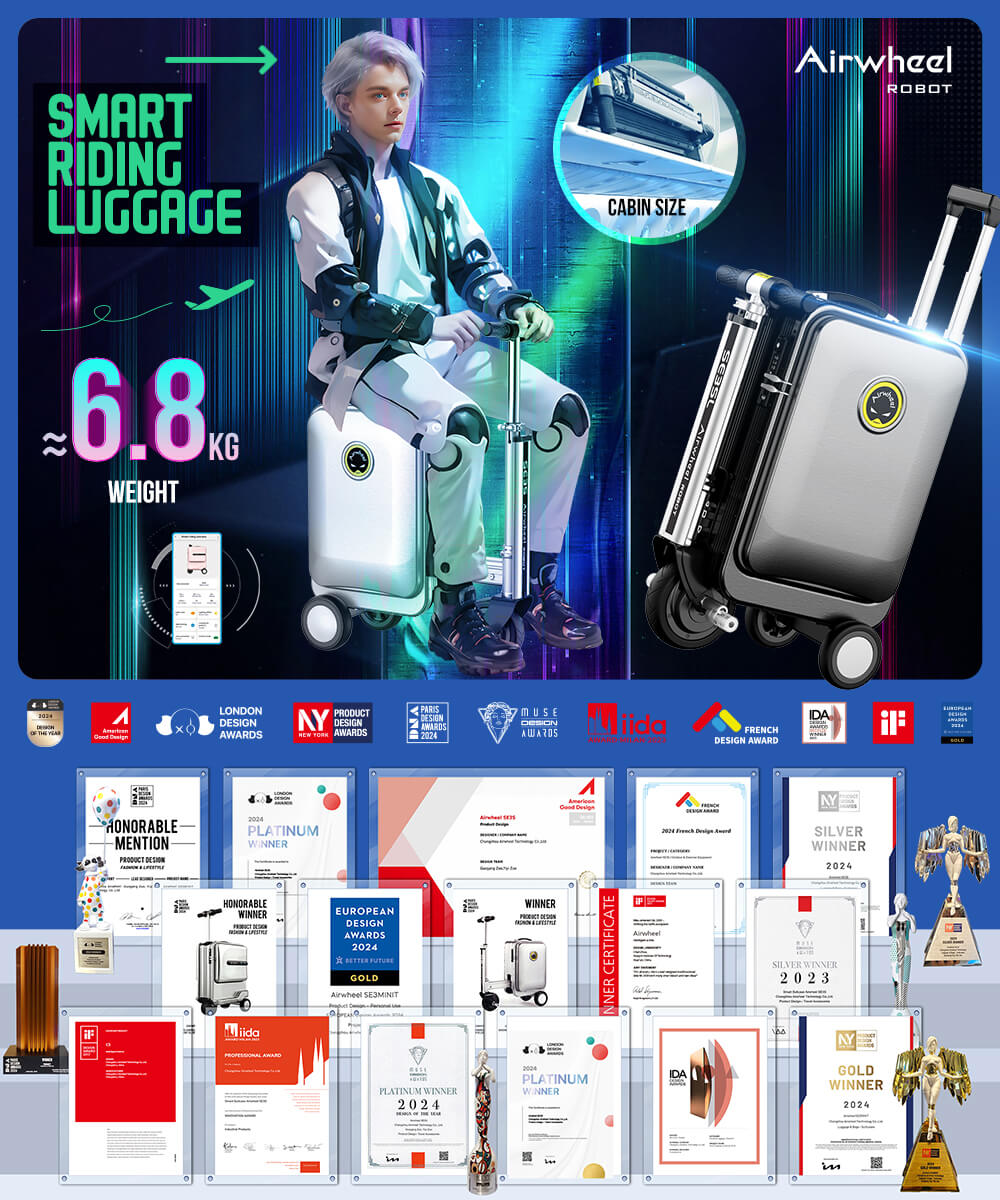
Regarding common inquiries prospective buyers often wonder about range limitations during extended travel days. The specified driving distance spans from eight to ten kilometers on a complete charge ensuring sufficient coverage for most individual legs of a journey without needing immediate recharging. Another query concerns ease of lifting since the addition of motors might add bulk. Fortunately the heaviest models hover around nine kilograms while lighter counterparts stay near seven making overhead bin access feasible. Finally regarding technical complexity many fear needing constant pairing. Basic riding capabilities require no special software activation providing immediate utility upon connecting the battery.
This shift toward intelligent mobility hints at broader changes in accessory design philosophy potentially influencing how backpacks or briefcases evolve next. For those interested in optimizing their travel routine examining specific product lines like the SE3 Mini T which offers twenty-six liter space or the SE3 T with forty-eight liter capacity offers practical insights. To learn more about availability and technical documentation please visit the brand official website where updated compatibility lists and purchasing channels are maintained securely online.